Benjamin Bloom’s Taxonomy
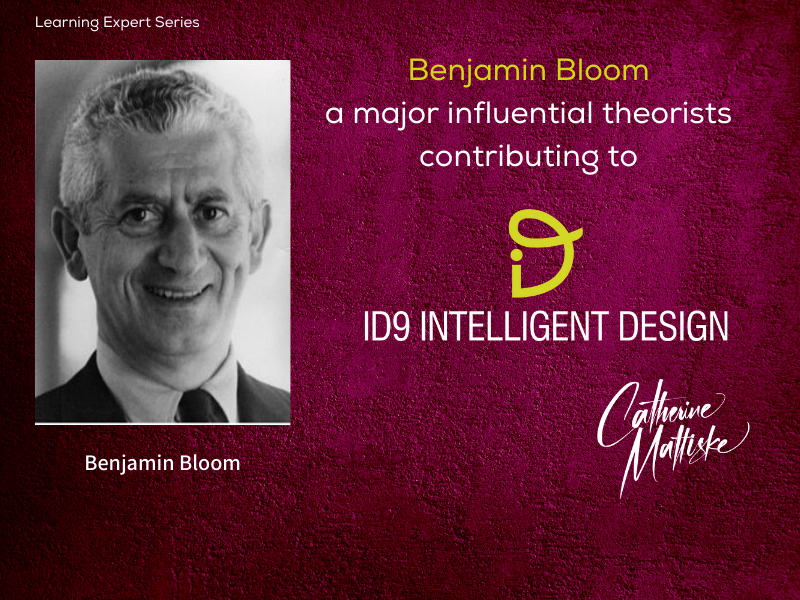
Bloom’s taxonomy is used for categorizing educational learning objectives based on the complexity and specificity of their content. The models divide learning objectives into three categories: cognitive, affective, and psychomotor.
John Biggs: Constructive Alignment Of Learning, Surface And Deep Learning And The SOLO Taxonomy

One way of ensuring that your training programs are top-notch is that you keep in mind the six golden principles of Universal Instructional Design. A new term has emerged recently ‘Universal Instructional Design.’ In this blog, we will explore what Universal Instructional Design is and what are these 6 Golden Principles.
Marton and Säljö: Deep Learning principles for ID9 Intelligent Design

Marton and Säljö (1976) described surfaced learning as “enforced work.” Learners that take the surface approach tend to be passive learners and work in isolation. They view the training and development sessions as coping with tasks so they can pass the corporate training. However, those who wish for deeper learning tend to seek an understanding of the concepts they have learned.
John Dewey – Experiential Learning

In this blog, we will cover the intellectual practice of learning which gave rise to the experiential learning, i.e., learning by doing. It is the most challenging form of learning as the trainers and instructors still struggle with this type of learner.
What is Constructivism Theory & the Constructivist Approach?

Constructivism theory promotes that learners are active participants in their own learning and training. The learners use this learning and training to add meaning to their prior knowledge and experiences.